

Published On: August 21, 2026 Categories: News

It usually starts with sunlight hitting the lounge room at the right angle. You notice a grey cast along the leading edge of the curtain, give it a shake, and a small cloud comes off it. The next thought is almost always the same one: could I just put these through the machine?
Sometimes, yes. Whether you can wash curtains at home depends entirely on what they are made of, and the difference is not obvious from looking at them. Here is how to work out which set you own before anything comes off the track.
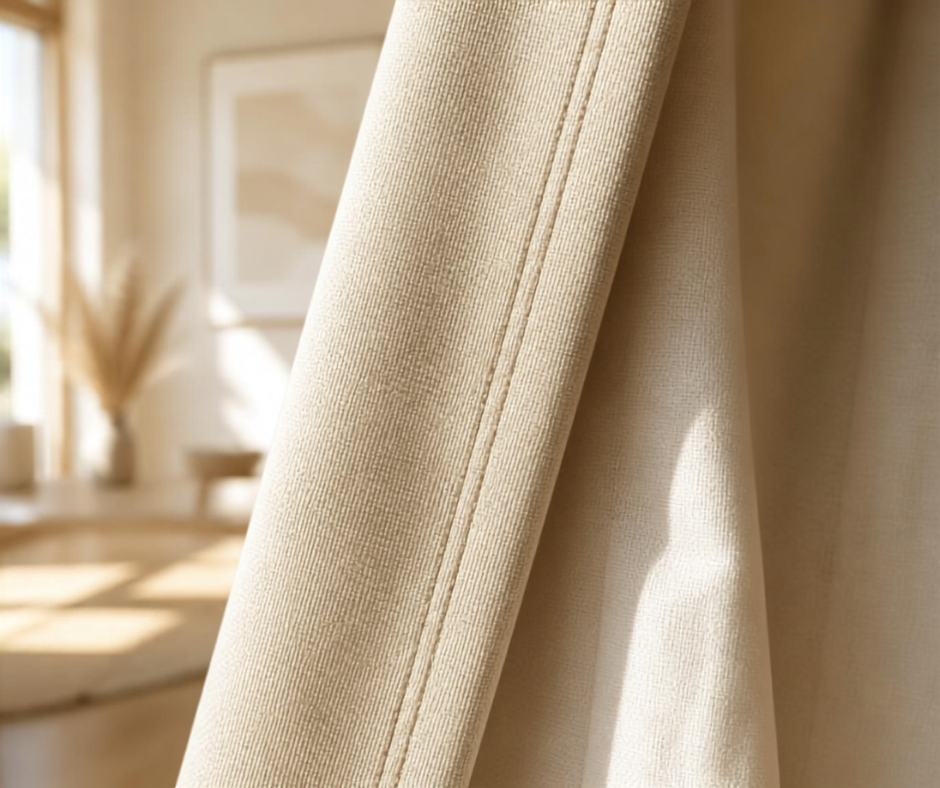
Most curtains have a label stitched into the side hem or behind the heading tape. It is worth finding, because it tells you what the maker intended.
A label marked with a circle means solvent cleaning only. A crossed-out tub means do not wash. If there is no label at all, which is common with custom-made drapery, treat that as a reason for caution rather than permission.
Turn a curtain over. If a second layer of fabric is sewn to the back, you have lined curtains, and this is the single most common reason home washing goes wrong.
The face fabric and the lining are usually different materials. Different materials move at different rates in water. When one layer draws up more than the other, the result is a rippled, puckered hem that will not hang flat again no matter how patiently you press it.
Interlined curtains, which carry a soft cotton layer in the middle for weight, are more sensitive again. Keep those out of water entirely.
Blockout fabric blocks light because of a coating applied to the back, not because the fabric is especially dense. That coating behaves nothing like textile.
Agitation can crack it and lift it away in flakes, and heat can make it tacky. Once it breaks down, the curtain still looks fine closed but lets daylight straight through, defeating the reason you bought it.
Ultraviolet light weakens fibres slowly and quietly. A curtain that has hung in a north or west-facing window for years can feel perfectly sound while dry, then tear during a wash cycle.
Check before you commit. Take a handful from the sunniest section, usually the leading edge or lower third, and work it gently between your fingers. If it feels crisp, or the weave separates under light pressure, that curtain is near the end of its life.
Unlined cotton or polyester panels in sound condition, with a care label permitting it, are generally fine. Café curtains, kitchen curtains and many lighter ready-made panels fall into this group, as do plenty of plain polyester sheers.
If your curtains have passed the checks above, a few habits make a real difference.
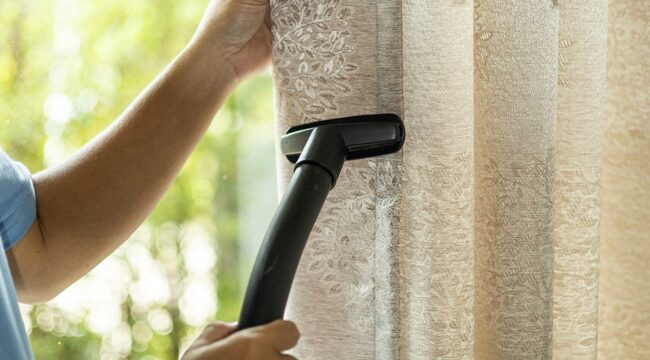
Shake them outdoors or vacuum them with a brush attachment on low suction. Dust that gets wet becomes mud, and mud works into the weave rather than out of it.
Cold water, the gentlest cycle available, a small amount of mild detergent. Skip bleach and skip fabric softener. Wash one pair at a time so the fabric has room to move.
Never combine bleach with vinegar, ammonia or any other cleaning product. The fumes produced are genuinely dangerous.
Tumble drying sets creases into curtain fabric and can shrink natural fibres. Line dry in shade, or rehang them slightly damp and let the fabric’s weight pull the creases out.

Practical factor only becomes obvious once you are holding it. A pair of wet lined drapes from a floor-to-ceiling window is extremely heavy, often beyond what a domestic machine can spin.
Then there is everything either side of the wash. Hooks go brittle and snap. Tracks work loose once the weight comes off. Curtains rehung without dressing hang shapelessly for weeks.
For lined, interlined, blockout, silk, wool or velvet, and for anything valuable or awkward to reach, it is safer not to wash curtains at home. Dr Drapes handles take-down, cleaning and rehanging as one job.
Can I wash curtains with hooks still attached? No. Metal hooks snag fabric and plastic ones can break. Remove them all and keep them in a labelled bag so you know which set is which.
Will washing curtains remove all the marks? Not always. General soiling and odour usually improve considerably, but old sun fade, water staining and set-in marks may not shift completely. No cleaning method, home or professional, can guarantee every mark will lift.
Are sheers safer to wash than heavy drapes? Often, though they crease easily and weighted hem tape can move differently to the fabric, leaving a wavy edge that tends to be permanent.
How can I tell if a curtain is too old to clean? Fabric that feels papery, sheds powder when rubbed, or splits under light pressure has reached the end of its life. Cleaning will not restore it.
If your curtains are lined, valuable or simply higher than you fancy climbing, there is no need to wash curtains at home at all. Dr Drapes will take them down, clean them and rehang them. Get in touch for a quote.
Recommended by Companies We Work With






Use the form below to drop us an email if you have any question or comments.

 1300 652 866