


Published On: October 23, 2026 Categories: News

Of all the questions that come up when someone rings about their drapery, this is the one that has been sitting in the back of their mind for years. Plenty of people put off cleaning curtains for a decade because they fear getting them back two inches off the floor.
It is a fair concern and it deserves a straight answer. Done properly, dry cleaning curtains should not shrink them. Done carelessly, it can. Understanding the difference makes it far easier to choose who handles them.
Shrinkage is largely a story about water.
Natural fibres such as cotton, linen and wool are spun and woven under tension. Soak them and the fibres swell, relax and draw back towards their untensioned length. That is why a cotton shirt comes out of a hot wash smaller than it went in.
The same behaviour applies to three metres of drapery, except the consequence is measured in centimetres of missing curtain rather than a tight collar.
Dry cleaning avoids this by using a solvent rather than water. The solvent lifts oils, soil and odour without causing fibres to swell, which is precisely why it suits lined and natural-fibre curtains.
Three explanations cover almost every case, and only one of them is genuine shrinkage.
This one surprises people. A heavy curtain hanging for years is under constant load from its own weight. Fibres creep, hems gradually drop, and a drape made to clear the floor slowly becomes one that pools on the carpet. Because it happens over years, nobody notices.
Cleaning releases that tension and the fabric relaxes back towards the length it was made at. The curtain has not shrunk. It has returned to its intended size, which simply feels like a loss when it suddenly clears the floor again.
A general dry cleaner is set up for suits and dresses. The cycles suit garment-sized loads and the finishing equipment is shaped for shoulders and sleeves.
Long lengths of lined drapery put through that process come back creased and distorted in ways the fabric was never intended to handle.
If a curtain has previously had a home stain treatment, a steam clean or a splash of carpet shampoo, that section has already been through a swelling and relaxing cycle. It can respond differently to solvent cleaning than the fabric around it. Always mention past treatments when you book, because it changes the approach.
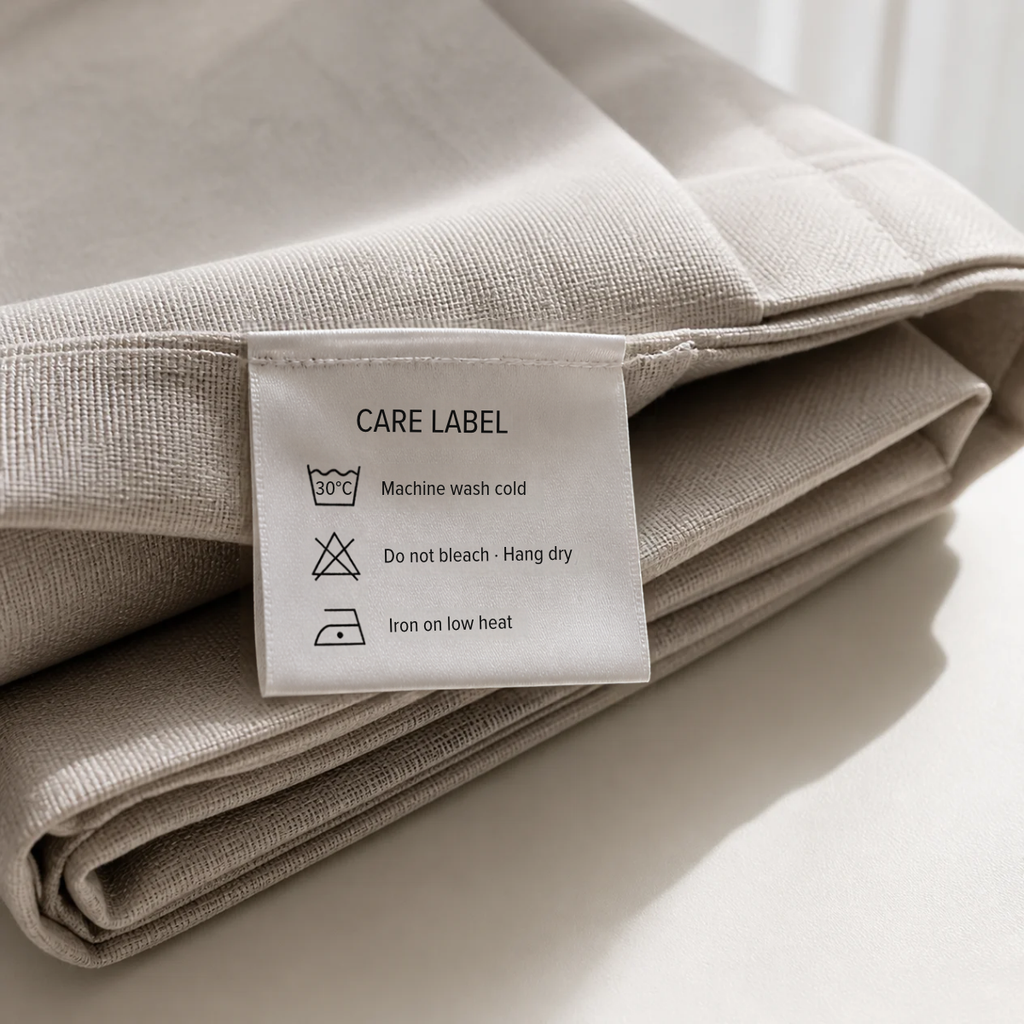
Every curtain should carry a label, usually stitched into the side hem or behind the heading tape. A circle symbol means solvent cleaning only, which is the maker telling you that dry cleaning curtains of that type is the intended method. Custom drapery often has no label, which is a reason for caution rather than a free hand.
Cotton and linen are most likely to move if water is involved, which is why solvent cleaning suits them. Interlined drapes need specialist handling because the middle layer behaves differently to both outer layers. Silk and wool require gentler cycles and lower finishing temperatures.
Polyester and most modern blockout fabrics are dimensionally stable and unlikely to shrink at all. With those, the concern is the backing coating rather than the size.
Sheers rarely shrink but crease and distort easily, which can read as damage even when the dimensions have not changed.
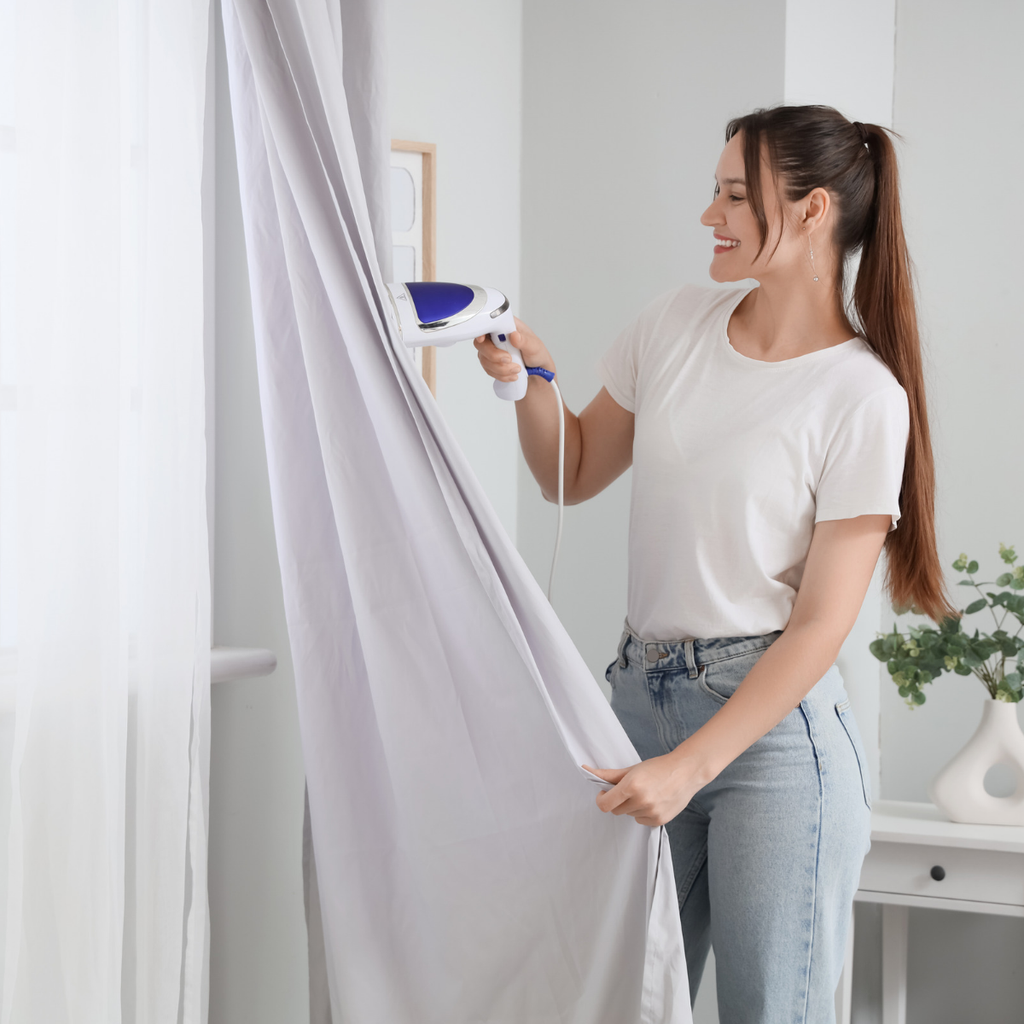
Curtains should be assessed before cleaning, not after. Fabric type, lining, age, sun damage and any previous treatment all change what the fabric can safely take.
They should also be handled at full length rather than tumbled, dried under controlled conditions, and finished without being folded through a press built for clothing.
The Dr Drapes plant in Melton exists for this work specifically, which means the equipment and the cycles are built around long lengths of curtain fabric.
Any lined, interlined or valuable curtain is worth handing over rather than experimenting with, as are silk, wool, velvet and anything with a pelmet attached.
An honest cleaner will also tell you when a curtain is too sun-damaged to clean safely. Far better to have that conversation at the quote stage.
Is dry cleaning safe for blockout curtains? Usually, provided the coating is intact. Have them assessed first, since a backing that has started breaking down will not improve with cleaning.
Can shrinkage be reversed if it happens? Rarely. Some fabrics can be eased slightly during finishing, but a significant loss of drop is generally permanent. This is why assessment beforehand matters.
Should I mention that my curtains were steam cleaned before? Yes, always. Any previous water-based treatment affects how the fabric responds and it is useful information for whoever cleans them.
Will dry cleaning get rid of the musty smell? It usually improves odour considerably. Deeply set smells, particularly smoke or long-term damp, may not disappear entirely, and no cleaner can promise complete removal.
If shrinkage is the reason you have been putting this off, it is a very common reason to wait too long. Contact Dr Drapes about dry cleaning curtains and we will assess your fabric first and tell you plainly what it needs.
Recommended by Companies We Work With


Use the form below to drop us an email if you have any question or comments.

 1300 652 866


